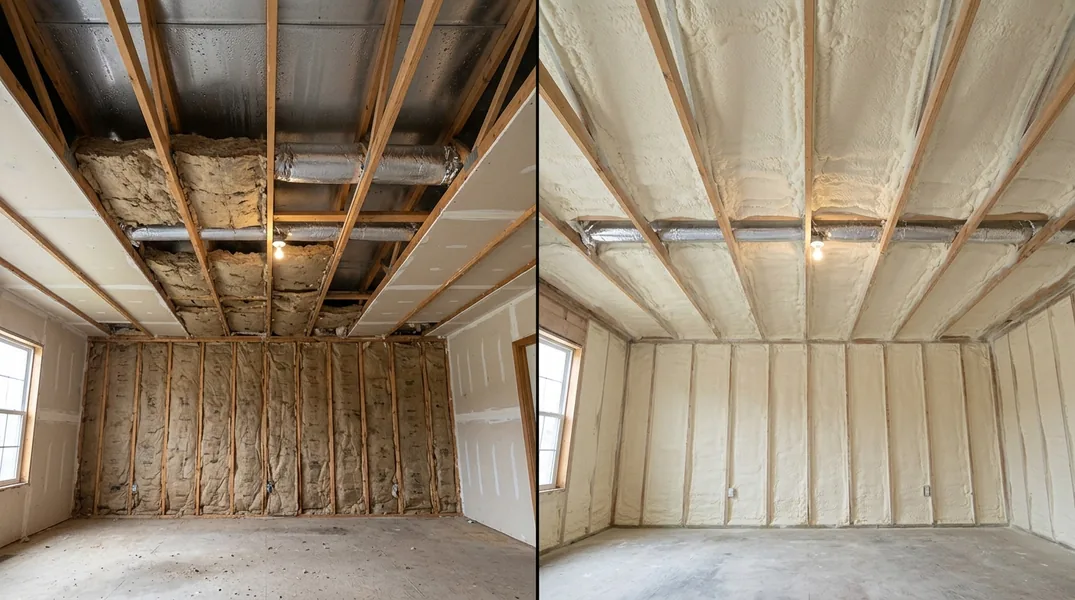
Understanding Open Cell vs. Closed Cell Spray Foam
When you're planning an Attic Spray Foam Insulation project in Omaha, one of the first decisions you'll face is choosing between open cell and closed cell spray foam. These two insulation types work differently, perform differently, and come with different price tags. Understanding the distinction is crucial to making the right choice for your home.
Open Cell Spray Foam has a lower density and a more flexible structure. Think of it as a sponge with interconnected air pockets that allow moisture vapor to pass through. This type is typically lighter, easier to apply in certain spaces, and generally more affordable. Open cell spray foam is excellent for interior applications where you want sound dampening properties and don't have moisture concerns. Many homeowners appreciate how open cell expands to fill gaps and crevices, creating a comprehensive air seal throughout your attic.
Closed Cell Spray Foam, on the other hand, has a higher density with tightly sealed air pockets that prevent moisture penetration. This makes it ideal for areas exposed to water or humidity, such as basements, crawl spaces, and exterior walls. Closed cell foam is more rigid, provides structural support, and offers superior moisture resistance. While it comes at a higher cost, the added durability and moisture protection often justify the investment for many homeowners.
Comparing R-Values: What You Need to Know
The spray foam R-value measures how well an insulation material resists heat flow. The higher the R-value, the better the insulation performance. However, comparing R-values between different foam types requires some nuance. Open cell spray foam typically achieves an R-value of approximately 3.5 to 3.6 per inch, while closed cell spray foam R value ranges from 6 to 7 per inch. This means closed cell foam provides significantly more insulating power in a thinner application.
For Omaha homeowners, understanding R-value requirements is essential for meeting building codes and maximizing energy efficiency. The U.S. Department of Energy recommends different R-value targets depending on your climate zone and the area you're insulating. Attic insulation in Nebraska typically calls for R-38 to R-60, depending on your specific location and heating/cooling needs. Open cell foam would require 11 to 17 inches to achieve this range, while closed cell would only need 6 to 10 inches. This thickness difference matters when space is limited or when you're working with existing structures.
It's important to note that R-value alone doesn't tell the complete story. While closed cell foam has a higher R-value per inch, open cell foam often provides better overall air sealing when applied properly, which can be just as important as the R-value itself. A professional assessment of your specific attic conditions, moisture levels, and climate needs will help determine which option delivers the best long-term value for your home.
Assessing Your Attic Condition Before Installation
Before you invest in Attic Spray Foam Insulation, a thorough inspection of your current attic is essential. Many homeowners discover existing problems like moisture damage, mold, or pest infestations that need to be addressed before spray foam can be safely applied. Spray foam won't solve underlying moisture issues; in fact, applying it over damp materials can trap moisture and create bigger problems down the line.
Start by checking for signs of water intrusion, including water stains on rafters, discoloration on insulation, or visible mold growth. Look for gaps in your current insulation, air leaks around ductwork and electrical penetrations, and any signs of pest activity. If you notice active leaks or significant moisture, these must be repaired first. Once your attic is dry and clean, spray foam can be applied effectively to create an airtight, well-insulated space that will improve your home's energy efficiency and comfort.
The condition of your roof and ventilation also matters. Proper attic ventilation prevents moisture buildup and helps extend the life of your roofing materials. When applying spray foam, you'll want to work with professionals who understand how to maintain adequate ventilation while still achieving excellent air sealing. This balance is crucial for long-term attic health and performance.
Attic Spray Foam Insulation Cost in Omaha: What to Budget
One of the most practical questions homeowners ask is about cost. The pricing for spray foam insulation varies based on several factors, including the type of foam, the square footage of your attic, current insulation conditions, and accessibility. Open cell spray foam generally costs less per board foot than closed cell, but you'll need more of it to achieve the same R-value. Closed cell foam costs more upfront but requires less material and provides superior moisture protection.
In Omaha, most residential attic spray foam projects range from $1,500 to $3,500 for a typical attic, though larger homes or complex installations may cost more. The best way to understand what your specific project will cost is to request a free estimate from a local professional. Omaha Spray Foam Insulation offers detailed assessments that account for your attic's unique characteristics, existing insulation, and your energy efficiency goals.
Don't make your decision based solely on the lowest price. Consider the long-term value, including energy savings, improved comfort, and durability. Higher quality installation and materials often pay for themselves through reduced heating and cooling costs over time. Ask potential contractors about their warranty, their experience with local climate conditions, and whether they offer financing options that might make the project more manageable for your budget.
Choosing the Right Contractor for Your Project
Selecting a qualified, experienced contractor is just as important as choosing the right foam type. Spray foam insulation installation requires specialized equipment, training, and expertise. Poor installation can result in uneven coverage, inadequate air sealing, or even damage to your attic structure. Look for contractors who are insured, and have extensive experience with spray foam installation in your area.
Ask potential contractors about their experience with both open cell and closed cell applications, their familiarity with local building codes, and their approach to maintaining attic ventilation. A reputable contractor will conduct a thorough inspection, explain their recommendations clearly, and answer all your questions about the process. They should also discuss post-installation care and maintenance to help you get the maximum lifespan from your new insulation.
Omaha Spray Foam Insulation has served homeowners throughout the area with professional, reliable service. If you're ready to explore spray foam insulation for your attic, contact the team at (402) 807-2989 or visit the website to learn more about your options. Whether you're interested in Open Cell Spray Foam Insulation, Closed Cell Spray Foam Insulation, or Wall & Injection Foam Insulation, a professional assessment will help you make the best decision for your home's energy efficiency and comfort.
Looking for a professional spray foam insulation contractor in Omaha? Omaha Spray Foam Insulation responds fast for all your spray foam insulation needs.
Get a Free Quote