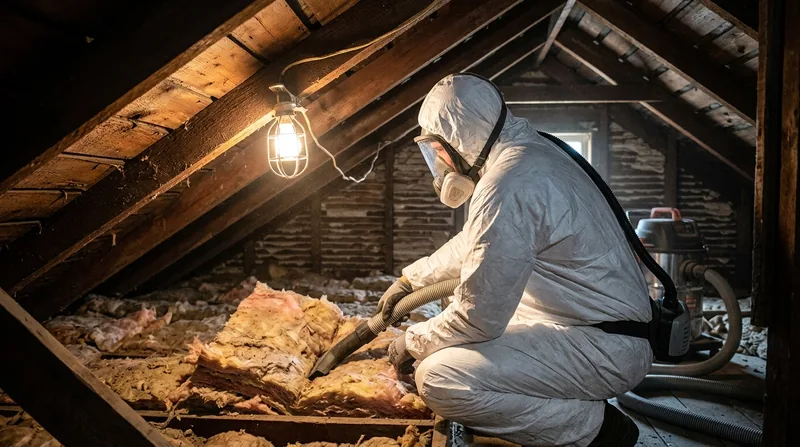




Attics in Midtown, Benson, and across Omaha often harbor old insulation that has settled, compacted, or absorbed moisture over decades. Before new insulation removal and spray foam retrofit can begin, that failed material must be cleared out completely so the deck is clean, dry, and ready for modern air sealing and thermal performance. We remove and dispose of the old insulation across Douglas, Sarpy, and surrounding counties, preparing the attic or wall cavity for the next generation of energy control. Cold winters off the Missouri River and hot, humid summers create a tough climate for old fiberglass and cellulose, and rim joist drafts combined with an underperforming attic drive most heating and cooling waste in homes from Papillion to Elkhorn. Removal is not glamorous, but it is the foundation of every retrofit that works.
Why Insulation Removal Matters in Omaha Homes
Flattened, damp insulation in older attics does not insulate. It absorbs humidity from basement moisture and summer vapor drive, loses its R-value, and becomes a thermal liability rather than an asset. Homes built in the early 1900s through the 1970s in neighborhoods like Dundee, Benson, and Midtown sit on full basements with balloon-framed walls and rim joists that leak cold air, and attics packed with decades of settled fiberglass compound the problem. Removing the old material is the only way to establish a clean, dry baseline before spray foam or blown-in insulation can perform as designed.
- We extract and haul away old fiberglass, cellulose, or mineral wool without disturbing asbestos-suspect materials like vermiculite, which we leave in place and flag for professional testing.
- We sweep and vacuum the attic deck to remove dust, debris, and compressed insulation residue that would compromise foam adhesion.
- We inspect the substrate for moisture, mold growth, or active leaks and will not proceed until the deck is dry and any water entry is addressed.
- We dispose of all material in accordance with local waste regulations and document the removal for your retrofit estimate.
A clean attic deck is the prerequisite for every high-performance insulation retrofit in the Omaha metro.
Key info: Vermiculite insulation, common in Omaha homes built before 1980, may contain asbestos. We do not disturb it. A licensed professional must test it before any removal, and we refer that work to qualified specialists.
How We Remove Insulation in Omaha: Step by Step
Removal begins with a clear understanding of what is in the attic, where it sits, and what the substrate looks like underneath. We bring industrial-grade equipment to contain dust and debris, establish negative pressure if needed, and work methodically to extract the old material without creating a health hazard or leaving residue that will interfere with new foam installation. The process is straightforward when done right, and it sets up the entire retrofit for success. Whether you are planning attic spray foam insulation or insulation replacement, removal is the first step.
- We photograph the existing condition and identify any asbestos-suspect materials, water damage, or structural concerns before we begin extraction.
- We set up containment barriers and dust suppression to keep the work zone isolated from living spaces below.
- We remove insulation in sections, breaking it into manageable loads and loading it into a truck or disposal container on site.
- We vacuum and brush the attic deck clean, removing compressed insulation dust and any debris that would compromise foam spray adhesion.
- We verify the deck is dry and document the finished condition before you proceed with new insulation or air sealing work.
Once the attic is cleared and cleaned, the foundation is set for high-performance spray foam or blown-in insulation to deliver the R-value and air sealing that Omaha winters demand.
Real example: A 1950s ranch in La Vista with 4 inches of settled fiberglass over the entire attic typically takes one day to remove and clean. A 1920s bungalow in Benson with a partial attic and balloon framing may take longer due to access constraints and the need to verify the condition of rim joists and band joists along the basement perimeter.
Insulation Removal Methods: What Works Best
| Approach | Description | Best for |
|---|---|---|
| Manual removal with vacuum containment | Insulation is broken apart by hand or hand tools, loaded into bags, and removed via vacuum or direct hauling with dust suppression active throughout. | Attics with moderate insulation depth, good access, and no asbestos-suspect materials. |
| Machine-assisted extraction | A pneumatic or mechanical device breaks up compacted insulation and feeds it into a collection truck outside, minimizing dust in the attic space. | Large attics with deep, settled insulation and sufficient roof or attic access for equipment positioning. |
| Selective removal and replacement | Only failed or damp sections are extracted, the remainder is left in place, and new insulation is added on top or alongside existing material. | Attics where the existing insulation is sound in some zones and only partial top-up or spot repairs are needed. |
| Complete attic clearance with deck preparation | All insulation is removed, the deck is cleaned and inspected, and moisture or structural issues are identified and documented before new insulation is installed. | Retrofits involving spray foam, sealed attics, or homes where a clean baseline is required for warranty or performance reasons. |
The right approach depends on the condition of the existing insulation, the attic access, and the type of new insulation planned. We assess the job on site and recommend the method that delivers the cleanest result and the best foundation for your next step.
Insulation Removal Cost in Omaha: What to Expect
Insulation removal in Omaha typically starts at $950 for a modest attic with good access and standard fiberglass insulation. The final cost depends on the attic size, the depth and density of the existing insulation, access constraints, and whether any asbestos-suspect materials require special handling or testing. Homes in Papillion, Elkhorn, and newer subdivisions with larger attics or complex framing may run higher. Older homes in Midtown and Benson with smaller attics or tight crawl spaces above first-floor ceilings may be lower. Getting two or three estimates from local contractors is the best way to understand what the job will cost in your neighborhood and what is included in each quote.
A full estimate includes the attic dimensions, the type and depth of insulation, access points, disposal logistics, and the scope of deck cleaning. We provide written estimates with R-value and thickness specifications so you know exactly what you are paying for and what the retrofit will accomplish. Visit our pricing page for detailed guidance on what drives cost, or call us at (402) 807-2989 for a free, no-obligation estimate within 24 hours.
Insulation Removal Near Me: What Omaha Homeowners Should Know When Hiring
Hiring the right contractor for insulation removal is about more than price. You want someone who will handle the old material responsibly, leave your attic clean and dry, and set up the next phase of work for success. Before you book, verify that the contractor is fully insured and can provide proof of coverage. Ask for references from recent jobs in your neighborhood, Bellevue, Ralston, or nearby areas. Understand what is included in the estimate: removal, disposal, deck cleaning, moisture assessment, and any special handling of suspect materials. If your home is in an HOA or a protected historic district, confirm that exterior work or attic access does not require architectural approval. Ask about the timeline, the crew size, and what re-entry window you should expect if spray foam is planned afterward.
- Verify that the contractor is fully insured and can provide a certificate of insurance naming you as additional insured for the duration of the work.
- Request a written estimate that specifies the insulation type, attic square footage, removal method, and disposal cost, never a vague per-board-foot figure.
- Ask for references from three recent jobs in Omaha or surrounding areas, and follow up with at least one homeowner to confirm the quality and professionalism of the work.
- Confirm that the contractor will not disturb asbestos-suspect materials like vermiculite, and will flag them for testing by a licensed professional if removal is necessary.
- Discuss the timeline for removal, deck cleaning, and any waiting period before new insulation or spray foam can be installed, so you understand the full project schedule.
A contractor who takes time to explain the work, answers your questions clearly, and provides a detailed written estimate is the one most likely to deliver a clean, professional removal that sets up your retrofit for success. Contact us at omaha-spray-foam.com/contact/ to schedule your free estimate and ask any questions about how insulation removal fits into your broader energy or comfort goals.
Insulation Removal in Omaha: Pricing Guide
| Service | Price | Details |
|---|---|---|
| Small attic removal (under 800 sq ft) | Starting at $950 | Includes extraction, hauling, disposal, and basic deck cleaning for modest single-story or ranch attics |
| Standard attic removal (800 to 1,500 sq ft) | Starting at $1,400 | Full removal, vacuum containment, deck cleaning, and moisture assessment for typical two-story Omaha homes |
| Large or complex attic removal (over 1,500 sq ft) | Starting at $2,100 | Multi-section attics, difficult access, or additional prep work for spray foam retrofit or sealed attic conversion |
| Asbestos-suspect material flagging and referral | Included | We identify vermiculite or other suspect insulation and refer testing to a licensed professional at no charge |
| Disposal and hauling | Included | All removed material is hauled and disposed per local waste regulations, no separate dumping fees or hidden charges |
| Free estimate | Free | Written estimate with attic dimensions, insulation type, and removal cost, response within 24 hours at (402) 807-2989 |
Indicative pricing, the exact cost depends on square footage, finish, and site access. Free personalized estimate within 24h at (402) 807-2989.


