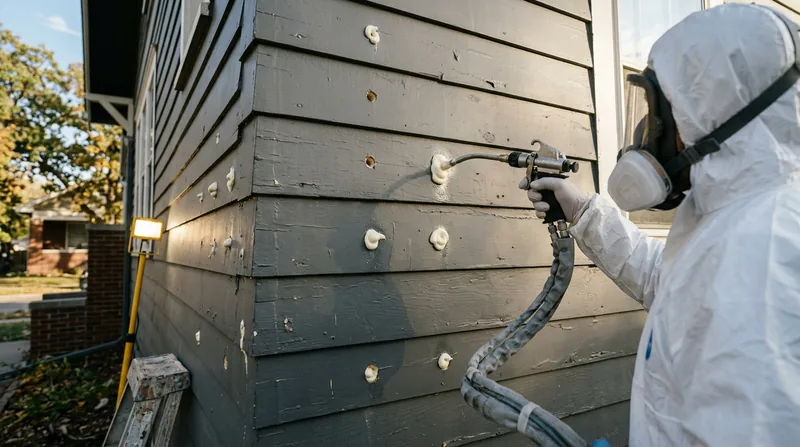




Wall & Injection Foam Insulation in Omaha retrofits the closed stud cavities of older bungalows and early-1900s homes without tearing into plaster walls. Dundee, Benson, and Midtown Omaha are filled with balloon-framed houses that lose heat through every cavity between the studs, driving winter bills higher and making rooms cold no matter how high you turn the furnace. We drill small holes from the exterior or interior, inject foam to fill the cavity completely, and patch the finish so the wall performs like new. This is the only way to insulate an existing wall cavity without demolition, and in a city where most homes were built before modern insulation standards, it solves a real problem. If your home was built before 1980 and you feel drafts or cold spots along exterior walls, injection foam is worth a serious look.
Why Wall & Injection Foam Matters in Older Omaha Homes
Dundee, Benson, Midtown, and neighborhoods throughout central Omaha are built on full basements with balloon-framed exterior walls. These walls have no insulation at all, or insulation that has settled and compressed over decades. In IECC climate zone 5A, with cold winters blowing off the Missouri River and humid summers, those uninsulated cavities are a constant energy leak. A single exterior wall can account for 15 to 25 percent of your heating and cooling load, and in homes where the plaster finish is original or valuable, tearing out the wall is not an option. Injection foam fills those cavities from the outside or inside without disturbing the finish, and it stays in place permanently.
- Fills closed stud cavities completely without opening the wall.
- Works on balloon-framed homes where studs run the full height of the house.
- Stops cold drafts along exterior walls in winter and reduces cooling load in summer.
- Preserves original plaster, lath, and architectural detail on the interior or exterior.
- Cures to a rigid foam that does not settle, compress, or shift over time.
Injection foam is the retrofit answer for homes where the walls matter too much to disturb.
Local example: A 1920s bungalow in Dundee with original plaster and lath walls, no cavity insulation, and rooms that stay cold along the north side. Injection foam fills the studs from outside without touching the interior finish, and the cold spots disappear. The home stays on the block with its character intact.
For more detail on how spray foam insulation works across your home, see our homepage or learn about closed cell spray foam insulation, which is the rigid foam used for injection work.
How We Inject Foam Into Closed Wall Cavities in Omaha
Wall injection is a straightforward process, but it requires knowledge of the wall cavity layout, the right equipment, and careful technique to avoid overfilling or damaging the finish. We drill small access holes (typically 3/4 inch) from the outside or inside, depending on what the wall finish is and where access is easiest. We inject closed cell foam at a controlled rate, filling the cavity from bottom to top so air pockets do not form. Once the foam cures (usually within 24 hours), we patch the holes with material that matches the existing finish. The wall is then fully insulated and the work is invisible.
- We locate the stud cavity and identify any pipes, wires, or blocking inside the wall before drilling.
- We drill access holes from the side that causes the least visible damage to the finish.
- We inject closed cell foam at the manufacturer's specified ratio and temperature, filling the cavity completely.
- We monitor pressure and flow to prevent overfilling, which can crack plaster or warp siding.
- We patch the holes with caulk, spackle, or matching exterior filler, leaving no trace of the work.
The entire process is quiet, fast, and leaves the wall structurally and aesthetically unchanged.
Omaha example: A 1950s ranch in Papillion with single-layer brick exterior and no wall insulation. We drill from the inside, inject foam into the cavity behind the brick, and patch the drywall. The brick stays on the house, the interior is never disturbed, and the wall R-value jumps from 0 to R-13 or R-15 depending on cavity depth.
For information about air sealing around windows, doors, and other penetrations that often accompany wall insulation work, visit our air sealing page.
Wall Injection Foam Methods and Materials
| Approach | Description | Best For |
|---|---|---|
| Exterior injection | Holes drilled from outside; siding or brick face is patched after cure. | Homes where interior finish is original or valuable; exterior repair is acceptable. |
| Interior injection | Holes drilled from inside; drywall or plaster is patched after cure. | Homes where exterior finish is valuable or complex; interior drywall is easier to patch. |
| Closed cell foam injection | Rigid, high-density foam (R-6 to R-7 per inch); moisture resistant; fills cavities completely. | All wall cavity retrofit work in Omaha; the standard for injection because it does not settle. |
| Multi-point injection | Foam injected at multiple heights in the cavity to ensure complete fill and prevent voids. | Tall cavities (10+ feet); cavities with internal blocking or cross-bracing that can trap air. |
Wall & Injection Foam Insulation Cost in Omaha: What to Expect
Wall injection foam in Omaha typically runs from $2 to $4 per square foot of wall cavity, depending on cavity depth, wall height, access difficulty, and whether you choose interior or exterior drilling. A typical exterior wall in a 1,200-square-foot home might have 400 to 600 square feet of cavity space (accounting for windows, doors, and other openings), which translates to a job cost between $800 and $2,400. The biggest cost drivers are cavity width (deeper cavities take more foam and time), wall height (tall cavities require multiple injection points), and access (if we have to set up scaffolding or work around obstacles, labor rises). Homes with finished basements or crawl spaces under the wall may require interior access, which can be easier and cheaper than exterior work if the finish is drywall rather than plaster.
We always provide written estimates that specify the square footage of cavity to be filled, the R-value you will achieve, and the total foam thickness. This lets you compare our price to other estimates fairly. We recommend getting at least two other quotes so you understand the range in your area. Visit our pricing page for a detailed breakdown of costs by service type and factors that move the estimate up or down.
Call us at (402) 807-2989 for a free estimate. We respond within 24 hours and schedule a walk-through at your home so we can see the walls, identify the best access point, and give you a firm quote before any work begins.
Wall & Injection Foam Insulation Near Me: What Omaha Homeowners Should Know When Hiring
Hiring the right contractor for wall injection foam is critical because the work is hidden once it is complete, so you cannot see if it was done correctly. A bad injection job leaves voids in the cavity, uses foam at the wrong ratio or temperature, or promises immediate re-entry without allowing time for cure. Before you call anyone, verify that the contractor is fully insured and carries liability and workers compensation coverage. Ask for a certificate of insurance, not just a verbal promise. Get at least two other estimates from contractors in the Omaha, Bellevue, and Papillion area so you understand the market price and the quality differences between shops.
- Ask for written estimates that specify R-value, foam thickness, and the square footage of cavity to be filled.
- Verify that the contractor will inject foam at the manufacturer's specified ratio and temperature, with mechanical ventilation during cure.
- Confirm that the contractor allows a 24- to 48-hour cure time before you re-enter the space, and explain why that matters for safety.
- Check references from homes in Omaha, Bellevue, La Vista, or Papillion where injection foam was completed in the last 1 to 2 years.
- Ask whether the contractor pulls permits if your city requires them, and whether they will help you navigate the local building department.
- Understand what warranty the contractor offers on the installation (typically one to three years on workmanship, not a lifetime guarantee).
An honest contractor will tell you upfront if a wall is too wet, too contaminated, or too damaged to insulate safely. If someone promises to spray over a wet wall or guarantees results without inspecting the cavity first, walk away. Contact us at (402) 807-2989 to schedule a free estimate and see how we approach the job.
Wall & Injection Foam Insulation in Omaha: Pricing Guide
| Service | Price | Details |
|---|---|---|
| Wall injection foam, exterior access | Starting at $2/sq ft | Holes drilled from outside; siding or brick patched; closed cell foam fills cavity completely |
| Wall injection foam, interior access | Starting at $2.50/sq ft | Holes drilled from inside; drywall patched; often easier access in finished basements or crawl spaces |
| Multi-point injection (tall or blocked cavities) | Starting at $3.50/sq ft | Multiple injection points required to fill cavities taller than 10 feet or with internal blocking |
| Complete wall retrofit (exterior wall, full height) | On estimate | Typical 400 to 600 sq ft cavity per wall; price depends on access, height, and interior or exterior approach |
| Travel and site visit | Included | No separate mileage fee in Omaha, Bellevue, Papillion, La Vista, and surrounding Douglas and Sarpy County areas |
| Free written estimate | Free | Includes R-value, thickness, cavity square footage, and total project cost; response within 24 hours at (402) 807-2989 |
Indicative pricing, the exact cost depends on square footage, finish, and site access. Free personalized estimate within 24h at (402) 807-2989.


