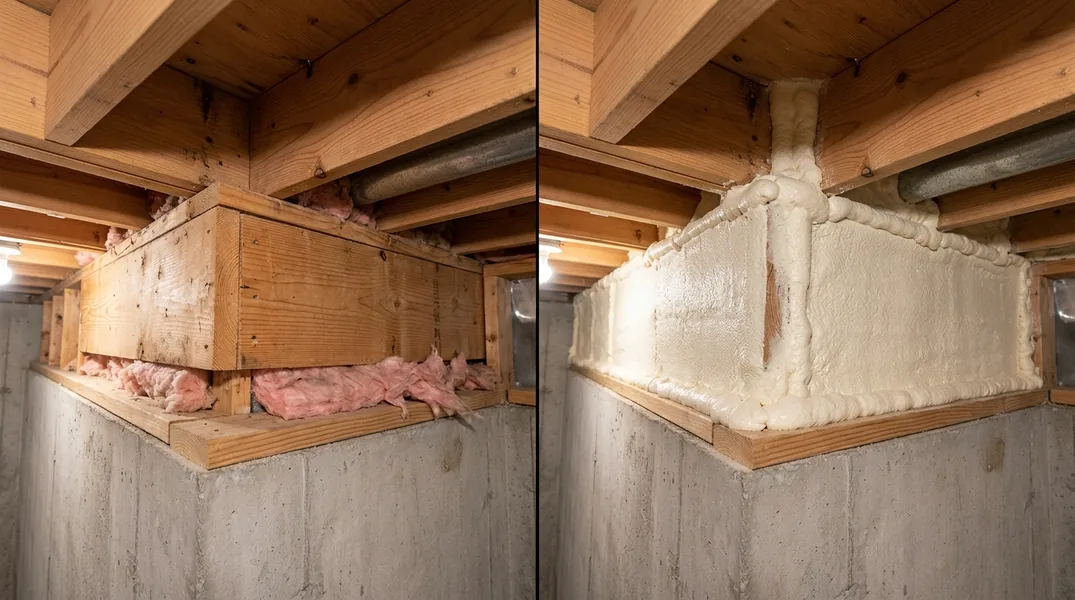
Understanding the Difference: Air Sealing vs. Full Spray Foam Installation
When homeowners in Omaha start thinking about improving their attic insulation, they often face a critical decision: should they invest in air sealing alone, or go with a complete Attic Spray Foam Insulation job? Both approaches have merit, but they serve different purposes and deliver different results. Understanding what each method does will help you make an informed choice for your home.
Air sealing focuses on closing gaps, cracks, and penetrations where conditioned air escapes. This includes sealing around electrical outlets, ductwork, pipe penetrations, and any other openings in your attic. It's a targeted approach that stops air leakage without necessarily adding significant insulation value. On the other hand, a full spray foam installation combines air sealing benefits with substantial thermal resistance. Spray foam expands to fill cavities, cracks, and irregular spaces while simultaneously creating an air barrier. The result is a more comprehensive solution that addresses both air infiltration and heat transfer.
Spray Foam Insulation R-Value Per Inch: What You Need to Know
One of the most important factors in choosing between air sealing and full foam installation is understanding R-value, the measure of thermal resistance. The spray foam insulation R-value per inch varies depending on the type of foam you select. Closed Cell Spray Foam Insulation typically delivers between 6.0 and 7.0 R-value per inch, making it the most efficient option available. Open Cell Spray Foam Insulation provides approximately 3.5 to 3.6 R-value per inch, which is still respectable but requires greater thickness to achieve the same thermal performance.
This difference matters significantly when you're calculating how thick spray foam should be in your attic. If you're aiming for an R-value of R-38 (a common target in the Midwest), closed cell foam requires only about 5.5 to 6.5 inches, while open cell foam would need roughly 10 to 11 inches. The thickness requirement directly impacts both material costs and installation time. For many Omaha homeowners with limited attic space or existing insulation, closed cell foam offers a more practical solution because it achieves superior performance in a thinner application.
R-Value Requirements by State and Local Omaha Standards
Before deciding on your insulation strategy, you should know what R-value requirements by state apply to your home. Nebraska, where Omaha is located, follows the International Energy Conservation Code (IECC). For attic insulation in most of Nebraska, the recommended minimum is R-38, though some climate zones may call for R-49 or higher depending on specific conditions and whether you're building new or retrofitting an existing structure.
Local building codes in Omaha may have additional requirements, so it's worth checking with the city or your local contractor to confirm what applies to your property. These standards exist for good reason: they help ensure your home maintains consistent temperatures, reduces heating and cooling costs, and minimizes strain on your HVAC system. If air sealing alone doesn't bring you to code-compliant R-values, you'll need to add insulation. This is where spray foam becomes particularly valuable, as it combines air sealing and insulation in one application rather than requiring two separate steps.
Attic Spray Foam Insulation Cost in Omaha: What to Budget
Cost is always a consideration for homeowners, and it's important to understand how air sealing and full foam jobs compare financially. Air sealing is typically the less expensive option, often ranging from a few hundred to a couple thousand dollars depending on how many penetrations need attention. However, air sealing alone won't improve your R-value if your existing insulation is already below code or insufficient for energy efficiency. You may end up needing both air sealing and additional insulation, which adds to the total project cost.
A full Attic Spray Foam Insulation job is a larger upfront investment, but it delivers both air sealing and insulation in one application. The pricing depends on several factors: the size of your attic, the type of foam (closed cell versus open cell), and the target R-value. For a typical Omaha home, expect to invest between $2,000 and $5,000 or more for comprehensive coverage. While this seems significant, remember that improved insulation typically pays for itself through energy savings within 5 to 10 years, and the benefits continue for decades.
Tax Credits and Rebates: How to Reduce Your Insulation Investment
Many homeowners don't realize that federal and state incentives can substantially reduce the cost of insulation upgrades. The insulation tax credit allows qualifying homeowners to claim up to 30% of the cost of certain energy-efficient home improvements, including spray foam insulation. This credit applies to both materials and labor, making it a significant financial benefit. To qualify, your project must meet specific energy efficiency standards, and the foam must be installed in an eligible location like an attic.
Beyond federal tax credits, many utility companies and state programs offer insulation rebates to encourage energy efficiency improvements. In Nebraska, various rebate programs may be available through your local utility provider. These rebates can range from a few hundred to several thousand dollars, depending on the program and the scope of your project. Before moving forward with either air sealing or a full spray foam installation, contact Omaha Spray Foam Insulation at (402) 807-2989 to ask about available incentives. Our team can help you understand which programs apply to your situation and ensure your project qualifies for maximum savings.
Making Your Decision: Air Sealing, Full Foam, or a Hybrid Approach
So, which option is right for your home? The answer depends on your current insulation status, budget, and long-term energy goals. If your attic already has adequate insulation (meeting or exceeding R-38) but you notice drafts or inconsistent temperatures, air sealing alone may be sufficient. However, if your insulation is thin, compressed, or missing in spots, air sealing won't solve the problem. You'll need to add insulation, and spray foam is the most effective method because it seals and insulates simultaneously.
Many homeowners find that a hybrid approach works best. Start with air sealing to eliminate the most obvious air leaks, then add spray foam insulation to achieve your target R-value. This approach ensures you're not paying for redundant air sealing and allows you to focus your budget where it matters most. The best way to determine the right strategy for your specific situation is to schedule a professional assessment. The team at Omaha Spray Foam Insulation can evaluate your current conditions, calculate your insulation needs, and recommend the most cost-effective solution. Contact us today for a free estimate and let's get your home performing at its best.
Looking for a professional spray foam insulation contractor in Omaha? Omaha Spray Foam Insulation responds fast for all your spray foam insulation needs.
Get a Free Quote